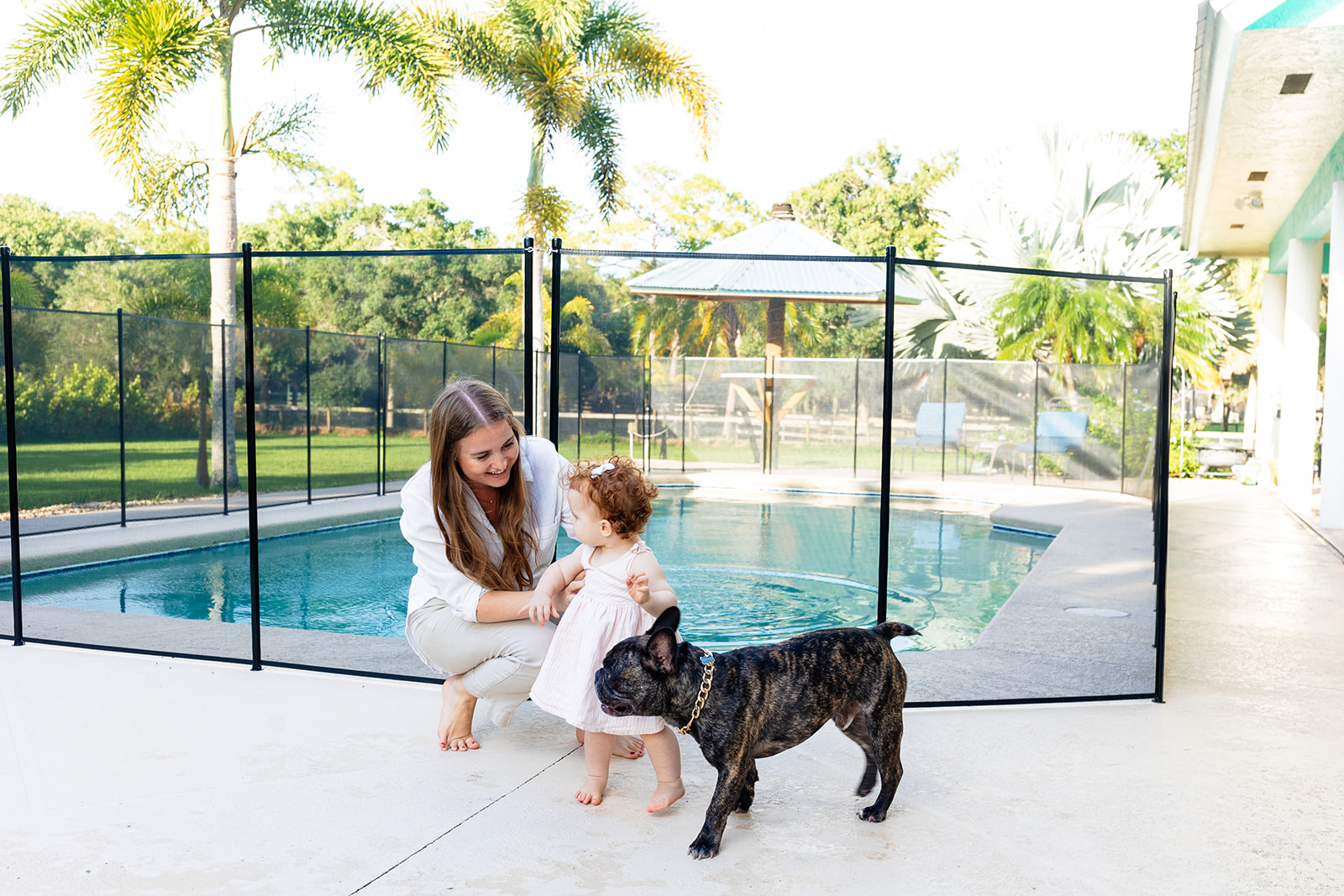
Pool Fence Safety: The Complete Parent's Guide
A four-sided pool fence reduces a child's drowning risk by up to 83%. We cover the types, Florida law, and what makes a professional installation worth every penny.
Why pool fences are the gold standard
The research is clear. A properly installed four-sided pool fence — one that completely surrounds the pool, not just the yard — is the single most effective drowning prevention measure available to residential pool owners.
Studies in the British Medical Journal and Pediatrics found four-sided pool fencing reduced the risk of drowning by 83 percent compared to three-sided fencing or no fence at all.
- Stops unsupervised access before a child reaches the water
- Works even when caregivers are momentarily distracted
- Most effective for children ages 1–5 — the highest-risk group
- Required by Florida law (§515.29) and most municipal codes

Pool barrier types compared
Every family's situation is different. Here's how the main options stack up.
Removable Mesh Fence
RecommendedPros
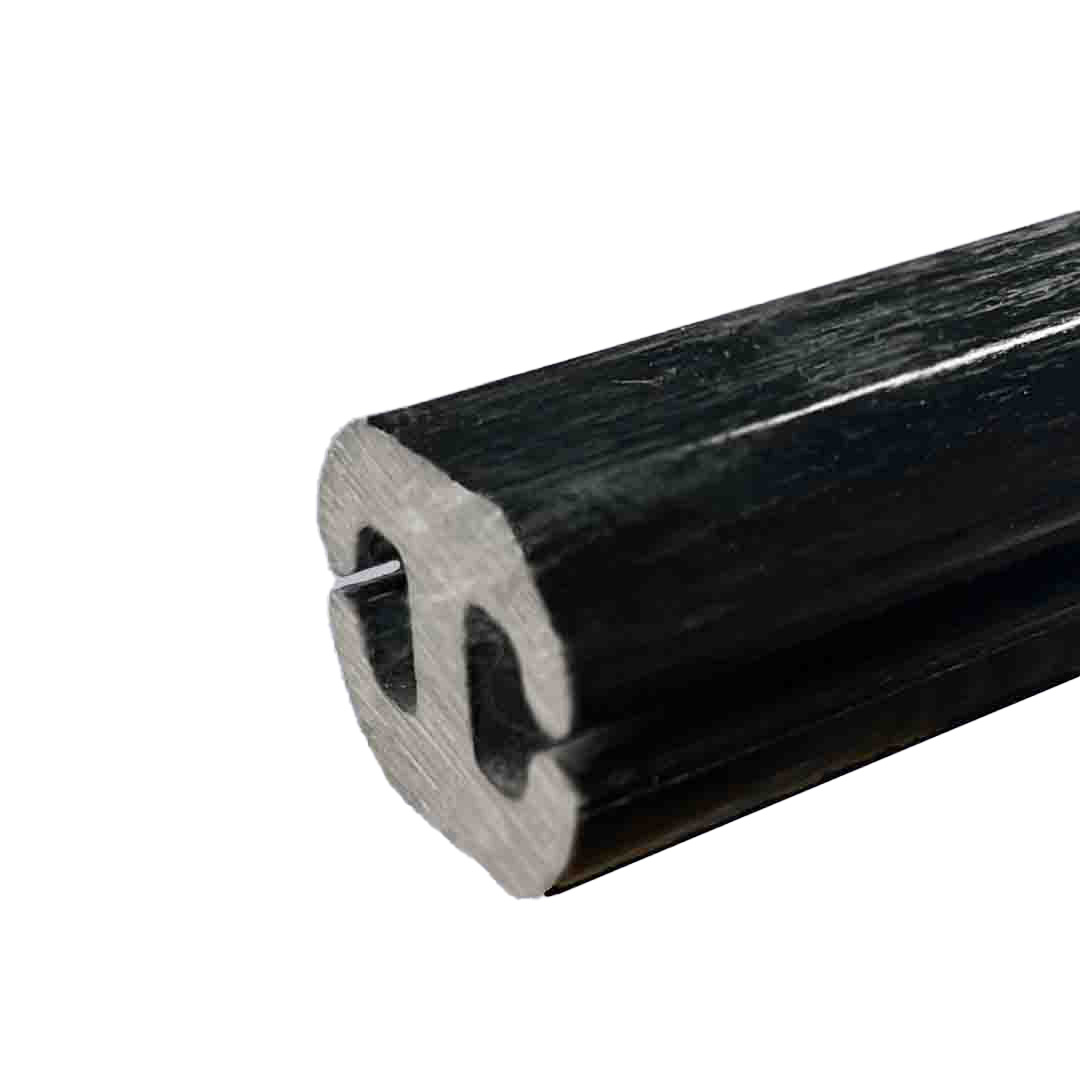
- Curved I-beam posts — no climbing footholds
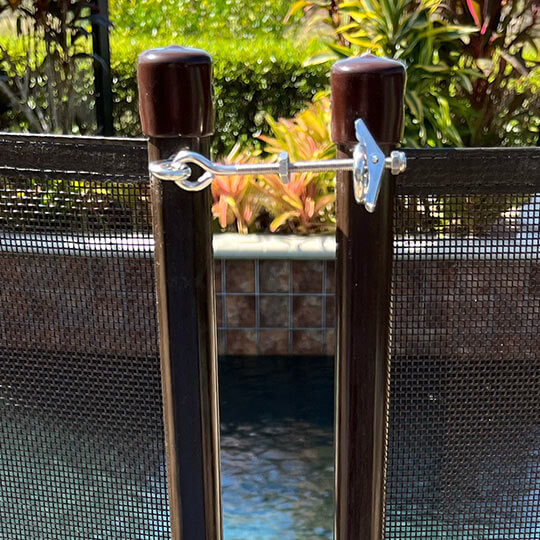
- No screws on the face of poles (clean, tamper-resistant)
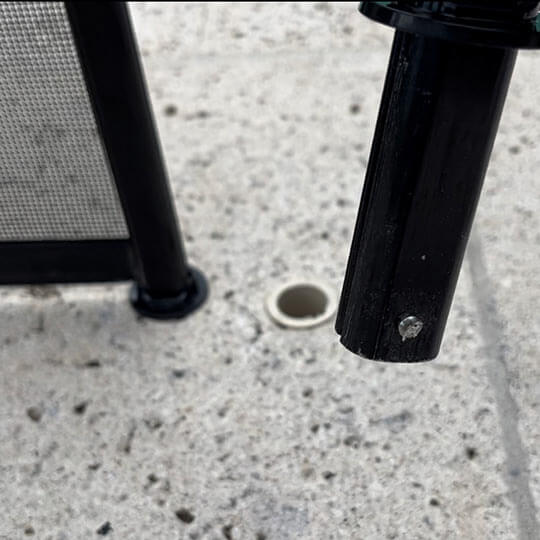
- Fully modular — panels replaced individually
- Removable in under 15 minutes, 3 simple steps
- Super-transparent mesh — no visibility blind spots
Cons
- Higher upfront cost vs. DIY options
- Professional installation required
Wrought Iron / Aluminum
Pros
- Permanent, very durable
- Attractive look for landscaping
Cons
- Vertical rails are easy for children to climb
- Gaps between rails
- Very expensive to remove or modify
Pool Safety Cover
Pros
- Keeps debris out when pool is unused
- Reduces chemical loss
Cons
- Must be secured properly every single use
- Water can collect on top
- CPSC does not consider it a substitute for a fence
Pool Alarm
Pros
- Inexpensive add-on
- Provides audio alert
Cons
- Reacts after entry — not preventive
- Frequent false alarms lead to being ignored
- Not a physical barrier
Florida Pool Barrier Requirements (§515.29)
Every residential pool in Florida must have at least one approved safety feature. Here's exactly what the statute requires for a fence to qualify.
- 1A pool barrier must be at least 48 inches high (4 ft). Safety experts recommend 60 inches.
- 2The barrier must completely surround the pool with no direct access from the house.
- 3Openings in the barrier must not allow a 4-inch sphere to pass through.
- 4Gates must open outward (away from the pool), be self-closing, and self-latching.
- 5The latch must be at least 54 inches from the ground OR located on the pool side of the gate.
- 6No furniture or climbable objects should be within 20 inches of the barrier.
Our recommendation
If you decide a removable mesh pool fence is right for your family, we recommend Protect-A-Child — a Florida-based manufacturer with 40+ years of experience specializing in child-safe pool fencing. Their patented curved fiberglass I-beam post design is purpose-built for maximum safety. See their full range at protectachild.com
Common questions about pool fences
What makes a mesh pool fence safer than wrought iron?
Mesh pool fences use flat panels with no horizontal rails or footholds, making them virtually impossible for young children to climb. The best models use curved I-beam posts that eliminate any gripping surface. Wrought iron fences have vertical bars with gaps that toddlers can use as a ladder.
How quickly can a removable mesh fence be taken down?
Most quality removable mesh fences can be taken down in 10–15 minutes using a simple unlatch-lift-roll process. Many families remove the fence for adult gatherings and reinstall it before children visit.
What height should a pool fence be in Florida?
Florida Statute §515.29 requires a minimum of 48 inches (4 ft). However, child safety experts and the AAP recommend 60 inches (5 ft) because older toddlers can scale a 4-foot barrier. Most professional installers offer 3.5 ft, 4 ft, and 5 ft heights.
Is a pool fence required by law in Florida?
Yes. Florida law requires every residential pool to have at least one of four approved safety features: a fence, a pool alarm, a door alarm, or an approved pool cover. A four-sided removable mesh fence is the most protective option and the one most commonly selected.
How do I find a reputable pool fence installer?
Look for installers who are licensed and insured, comply with ASTM F2286 safety standards, and offer a warranty. Ask for references and check reviews. Make sure they offer a four-sided configuration (not just three-sided) and verify they meet your county's specific code requirements.
Ready to Install a Pool Fence?
A four-sided removable mesh fence is the #1 barrier recommended by safety experts to prevent child drowning. Work with a certified professional installer in your area for the best protection.
For Florida families, we recommend Protect-A-Child — trusted by families for 40+ years.